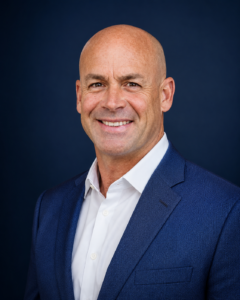
ERES Companies’ Joe Pierce Expands Brokerage Coverage into Arizona

PHOENIX, ARIZ. [July 7, 2026] — ERES Companies today announced that Joe Pierce, Vice President on the firm’s Brokerage team, is expanding his brokerage coverage into Arizona, with an initial focus on Greater Phoenix and select Arizona growth corridors tied to industrial, office, land, medical, owner-user, and build-to-suit opportunities.
The coverage expansion reflects ERES’ continued support of brokers working across high-opportunity markets where business growth, commercial real estate activity, and practical client demand create meaningful opportunities for owners, developers, investors, landlords, tenants, and occupiers.
Pierce brings more than 20 years of commercial real estate experience and has led leasing efforts for more than 100 properties totaling close to 10 million square feet and nearly $500 million in gross revenue. His background includes landlord representation, tenant representation, build-to-suit projects, dispositions, contract negotiations, and market analysis.
“We see Arizona as a strategic market because it combines long-term growth with meaningful activity across industrial, office, land, and owner-user demand. Joe Pierce brings the kind of practical, execution-focused experience that aligns well with Greater Phoenix and the state’s most active commercial growth corridors,” said Tom Bradley, President at ERES Companies.
Pierce’s background also includes first-hand knowledge of the energy industry and market experience across active operating regions including Colorado and Texas, along with New Mexico, Oklahoma, Wyoming, and North Dakota. That perspective supports his work with clients navigating growth, relocation, expansion, and strategic real estate decisions in Arizona.
“I’m proud to expand my brokerage coverage into Arizona with ERES. Arizona, and especially Greater Phoenix, offers real opportunity across industrial, office, land, medical, owner-user, and build-to-suit activity, and I’m looking forward to building strong relationships in the market,” said Joe Pierce, Vice President, Brokerage at ERES Companies.
ERES Companies is a full-service real estate platform that provides brokerage, project management, property and facility management, energy market services, construction, consulting, and investment / development services across growth-oriented markets.
About ERES Companies
Founded in 2014, ERES Companies is a fast-growing, vertically integrated real estate firm providing all-inclusive real estate services in key and emerging markets across the globe. With more than 175 professionals, ERES supports clients through brokerage, capital, development, project management, construction, asset services, energy market services, and consulting. The firm has completed thousands of projects domestically and internationally and has partnered with organizations, investors, developers, and Fortune 500 companies to solve complex real estate challenges. For more information, visit www.EREScompanies.com.
Arizona Commercial Real Estate in 2026 | Why ERES Is Watching the Market
Arizona is not just getting attention. It is earning it.
In 2026, Arizona continues to stand out as one of the most compelling commercial real estate markets in the Southwest. From Greater Phoenix to the state’s broader growth corridors, the market is being shaped by the kind of fundamentals that matter over the long term: manufacturing depth, transportation infrastructure, business concentration, airport activity, population growth, and major private investment.
At ERES Companies, those are exactly the kinds of indicators we pay attention to. They point to more than headlines. They point to a market with real operational relevance, real business movement, and real commercial real estate opportunity.
That is one reason Arizona is firmly on our radar in 2026. It is also why Joe Pierce’s continued growth with ERES, including his expanded brokerage coverage into Arizona, is a meaningful development for clients looking for practical, experienced guidance in the market.
ARIZONA HAS THE FUNDAMENTALS THAT SUPPORT LONG-TERM COMMERCIAL REAL ESTATE ACTIVITY
Commercial real estate momentum does not come from one statistic. It comes from a combination of factors that create durable demand over time.
Arizona continues to show many of those signals clearly.
5,498 manufacturing establishments statewide
130,000 miles of highways and a 2,000-mile freight rail system
52,325,266 passengers moved through Phoenix Sky Harbor in 2024
Scottsdale Airpark includes 2,500+ businesses and 48,000+ employees
Amkor expanded its planned Peoria investment to $7 billion and up to 3,000 jobs
These are not small signals. Together, they point to a market with real depth, real movement, and real staying power.
WHY ARIZONA MATTERS FOR OWNERS, DEVELOPERS, INVESTORS, AND OCCUPIERS
Arizona’s relevance is not limited to one property type.
It is a market that continues to create opportunity across industrial, office, land, medical, owner-user, and build-to-suit activity. That matters because the strongest markets are rarely driven by just one segment. They are supported by a broader ecosystem of business growth, development activity, infrastructure, and capital investment.
For owners and developers, Arizona offers the kind of long-term market support that can justify strategic expansion and new investment.
For investors, it presents a region where growth, business migration, and infrastructure continue to shape demand.
For occupiers and owner-users, it offers access, scale, and business-oriented growth corridors that matter in real operating terms.
At ERES, we believe the most relevant markets are the ones where business conditions and real estate conditions reinforce each other. Arizona continues to be one of those markets.
WHY ERES IS WATCHING ARIZONA IN 2026
ERES Companies is a full-service real estate platform built to help clients navigate growth-oriented markets with practical execution and long-term perspective.
Our platform includes brokerage, project management, property and facility management, energy market services, construction, consulting, and, through ERES Capital, real estate investment and development capabilities. That matters in a market like Arizona because clients do not just need surface-level market commentary. They need a partner that understands how real estate decisions connect to broader business, operational, and investment objectives.
Arizona is the kind of market where that broader perspective matters.
It is not enough to know that a market is active. You need to understand where activity is happening, why it is happening, and how that translates into real opportunities for owners, users, developers, and investors. That is where ERES is built to bring value.
JOE PIERCE’S CONTINUED GROWTH WITH ERES INCLUDES ARIZONA IN 2026
As part of his continued growth with ERES Companies, Joe Pierce expanded his brokerage coverage into Arizona in 2026.
Joe serves as Vice President and a key member of the Brokerage team at ERES. He brings more than 20 years of commercial real estate experience and a track record spanning industrial, office, land, and medical properties. He has led leasing efforts for more than 100 properties totaling close to 10 million square feet and nearly $500 million in gross revenue.
His experience includes landlord representation, tenant representation, build-to-suit projects, dispositions, contract negotiations, and market analysis. Just as importantly, Joe brings an execution-focused mindset shaped by hands-on experience in operationally complex markets. His background gives him a practical understanding of the issues businesses face as they grow, relocate, expand, or reposition space.
That makes Arizona a natural fit for his continued growth.
As Arizona continues to attract investment, business activity, and commercial real estate attention, Joe’s experience positions him well to support clients looking for knowledgeable, practical brokerage guidance backed by the broader ERES platform.
GREATER PHOENIX REMAINS CENTRAL TO THE ARIZONA COMMERCIAL REAL ESTATE CONVERSATION
Any serious conversation about Arizona commercial real estate starts with Greater Phoenix.
Greater Phoenix continues to be one of the most important business and real estate engines in the region. It brings together industrial growth, airport activity, business concentration, infrastructure, and large-scale investment in a way that continues to make it highly relevant for commercial real estate decision-makers.
That does not mean every opportunity looks the same. It means the market is broad, active, and increasingly important across multiple sectors.
For ERES, that makes Greater Phoenix a market worth watching closely.
For Joe Pierce, it makes Arizona a logical extension of a career built around helping clients navigate active, opportunity-rich markets with discipline and real-world perspective.
ARIZONA IS A MARKET WORTH WATCHING, AND ERES IS PAYING ATTENTION
Arizona is not a trend story. It is a business story.
It is a market where the underlying fundamentals continue to support commercial real estate activity, and where the right guidance can make a meaningful difference for owners, developers, investors, and occupiers evaluating what comes next.
At ERES Companies, we are watching Arizona closely in 2026 because we believe it is a market with real momentum and real long-term relevance.
And as Joe Pierce continues to grow his coverage with ERES, Arizona is an important part of that story.
LEARN MORE ABOUT ERES COMPANIES
To learn more about ERES Companies and our brokerage platform, visit www.erescompanies.com.
Joe Pierce
Vice President | Brokerage
303.551.4582
joe.pierce@erescompanies.com

Preconstruction Is Where Projects Are Won
Most project problems do not begin in the field. They begin earlier, when the scope is vague, the budget is optimistic, procurement assumptions are stale, responsibilities are unclear, or the schedule is built around hope instead of constraints.
By the time a project is visibly off track, the owner has fewer good options. Change orders are harder to avoid. Lead times are harder to compress. Contractors are harder to realign. Tenants, lenders, investors, and internal stakeholders are already asking why the original plan changed.
That is why preconstruction is not a preliminary step. It is the point where project risk is either reduced or embedded.
JLL’s 2026 U.S. Construction Perspective emphasizes the need for early contractor engagement, dynamic risk-sharing, and location-specific procurement as construction conditions vary by region and project type. That is a useful reminder for commercial real estate owners: national cost assumptions are not enough. The feasibility plan has to reflect the local reality of labor availability, permitting timelines, material access, utility constraints, contractor capacity,y and pricing risk.
A stronger project management process starts before design decisions harden. The first job is scope validation. What exactly is being built, renovated, improved, or decommissioned? Which elements are mission-critical and which are preference? Where are the unknowns? What decisions will create downstream cost or schedule exposure? If the scope cannot be explained clearly, it cannot be priced or managed reliably.
The second job is budget development. A useful budget is not just a number. It is a set of assumptions, exclusions, contingencies, and decision points. Owners need to know what is included, what is not included, what could move, what has been benchmarked,d and what still needs validation. The earlier those assumptions are visible, the less painful the value engineering process becomes.
The third job is schedule development. A schedule should not be a motivational poster. It should identify critical path activities, dependencies, approval windows, entitlement risks, procurement lead times, inspection sequences, and occupancy requirements. If the schedule ignores a known bottleneck, the project team has not solved the problem. It has hidden it.
Procurement is another area where early discipline pays. Materials, equipment,t and specialized trades can carry different lead times across regions. Procurement strategy should consider when packages need to be released, where alternates are acceptable, how pricing volatility will be handled, and which vendor relationships matter most. For owners working across secondary or remote markets, procurement cannot be generic.
This is where the owner’s representative role becomes valuable. The owner’s rep is not there to add another layer of meetings. The owner’s rep protects the owner’s objectives by coordinating scope, budget, schedule, design, procurement, and communication. That role becomes especially important when internal teams do not build every day or when a project requires coordination across brokers, designers, contractors, operators, municipalities, and asset managers.
ERES Project Management provides commercial project and construction management and entitlement services for new construction, renovation, tenant improvement,t and decommissioning projects. The stated service mix – budget development, schedule development, scope validation, cost estimating, value engineering, design assistance, site selection support, and feasibility analysis – maps directly to the areas where owners most often lose control.
The practical question for owners is simple: when should project management begin?
The answer is before the project feels like a project. It should begin when a site is being evaluated, when a lease is being negotiated, when a tenant improvement allowance is being discussed, when a development budget is being tested, or when a renovation is being considered as part of an asset strategy.
Waiting until construction starts may feel efficient, but it often means the most important decisions have already been made without the full cost, schedule, and execution context.
A good project management process does not eliminate uncertainty. It makes uncertainty visible early enough to manage. In a construction environment where local conditions matter, visibility is the difference between a project that is controlled and a project that is explained after the fact.
The NOI Pressure Test: Why Property Management Is Now an Investment Strategy
When capital markets are easy, weak operations can hide for a while. When returns are income-driven, they cannot. Every avoidable vacancy, delayed repair, soft renewal, unmanaged vendor contract, and missed reporting cadence shows up in net operating income.
That is why property management and asset management should not be treated as administrative functions. They are investment strategy. The building’s value is not protected only at acquisition or disposition. It is protected every month through tenant retention, expense control, maintenance planning, reporting discipline, and the ability to make decisions before problems become expensive.
The 2026 CRE environment makes this more important. CBRE expects commercial real estate returns to be heavily income-driven, with asset selection and management serving as key performance drivers. In multifamily, CBRE also notes that operational challenges remain in high-supply markets even as longer-term demand fundamentals remain constructive. Translation: owners who wait for the market to do the work for them may be disappointed. Operators who actively manage income and expenses have more levers.
A practical NOI pressure test starts with revenue quality. Are rents simply being pushed, or are they being earned through service, responsiveness, and tenant fit? Are renewal conversations happening early enough? Are tenants receiving clear communication before small frustrations become reasons to leave? For multifamily, office, industrial, and mixed-use assets, retention is often less expensive than replacement. It reduces downtime, concessions, make-ready costs, leasing commissions, and uncertainty.
Next comes expense visibility. Owners need more than a year-end budget. They need a rolling view of utilities, insurance, taxes, repairs, maintenance, payroll, contract services, capital needs, and controllable versus uncontrollable expenses. If an expense line is increasing, the question is not just “why did it go up?” The question is whether the asset team saw it coming, had alternatives, and communicated the impact early enough for ownership to act.
Maintenance is another value lever. Reactive maintenance seems cheaper until it leads to downtime, emergency pricing, tenant frustration, or premature capital replacement. A proactive facilities plan should identify building systems by condition, criticality, replacement horizon, and operational risk. The goal is not to over-improve the asset. The goal is to prevent avoidable value leakage.
Reporting also matters. Timely reporting is not a formality; it is how ownership clearly sees the asset. Asset managers should be able to connect financial results to operational causes: rent collections, delinquency patterns, renewal activity, work order trends, vendor performance, leasing traffic, market concessions, and capital projects. Good reporting should make the next decision easier.
This is where ERES Asset Services sits directly inside the investment equation. ERES describes its asset services team as helping clients implement comprehensive investment strategy while coordinating property and facilities management. That combination is important because the management plan and the investment plan should not live in separate conversations. Annual budgeting, reforecasting, tenant relations, valuation, financial analysis, maintenance, leasing, and market SWOT analysis all feed the same outcome: stronger cash flow and stronger reversion value.
OWNERS SHOULD ASK 3 BLUNT QUESTIONS ABOUT EVERY ASSET IN 2026:
FIRST: Where is NOI leaking today? That could be vacancies, concessions, maintenance inefficiencies, undermanaged recoveries, poor renewal timing, vendor pricing, or slow decision-making.
SECOND: What expense pressure is likely but not yet visible? Insurance, labor, materials, utilities, and deferred maintenance can all outpace rent growth.
THIRD: What would a buyer or lender criticize during diligence? If the answer is unclear reporting, reactive maintenance, weak tenant retention, or unexplained expense growth, the asset has a management issue before it has a market issue.
The best asset managers do not simply keep the lights on. They create the conditions for better valuation. In a market where income durability matters, that is not operational housekeeping. That is the investment thesis.